

Gold and commodities as alternative investments in Africa are no longer optional. African investors watching their naira, cedi, or rand savings lose value know something their developed market counterparts don’t: when currencies collapse and inflation runs hot, traditional portfolios offer little protection. While global investors debate whether to add 5% commodities for “diversification,” African portfolios face realities that make gold alternative investment in Africa strategies less optional, more essential.
The numbers tell the story. Foreign investment in Africa hit $97 billion in 2024, up 75% from 2019. Yet individual investors still struggle with currency swings that can erase decades of wealth in months. Nigeria’s naira fell from ₦460 to ₦1,505 per dollar between 2019 and 2024, an 85% decline. Ghana’s cedi dropped 76% over the same period. Traditional savings accounts paying 8-12% interest delivered negative real returns when local inflation spiked above 20%.
This creates an investment case that doesn’t exist in developed markets: commodities alternative assets Africa allocations aren’t just portfolio optimization, they’re wealth preservation.
Why Gold and Commodities Endure

Gold as hedge strategies aren’t new to Africa, they’re as old as the trans-Saharan trade routes. What changed is accessibility. Today’s African investors can choose physical bullion, ETFs, mining stocks, or agricultural commodity exposure while maintaining the core benefit: assets that hold value when paper currencies don’t.
Three factors drive this enduring appeal, particularly in African markets. Currency volatility here exceeds anything developed market investors experience. The naira’s 85% decline, cedi’s 76% drop, and Egyptian pound’s 68% fall over five years dwarf the euro’s 18% move against the dollar. Second, official inflation statistics consistently understate real price pressures. Nigeria’s official 18.6% inflation in 2023 masked food price increases exceeding 25%. Third, political and economic uncertainty creates systematic risks that gold and commodities naturally hedge.
Africa’s projected economic growth from 3.3% in 2024 to 3.9% in 2025 supports this case. Solid growth creates wealth but also inflationary pressure that makes commodity exposure both protective and profitable.
Investment Cases
Hedge Against Inflation and FX Swings
The hedge works differently than most expect. Instead of gold prices simply rising with local inflation, commodities preserve purchasing power by maintaining international value while local currencies weaken. When the naira moved from ₦460 to ₦760 between January 2023 and early 2024, Nigerian investors holding gold-denominated assets maintained purchasing power while naira savings lost nearly 40% of their dollar value.
This pattern repeats across the continent. Currency devaluations typically correlate with commodity strength, creating natural portfolio protection. Gold shows negative correlation with African currencies during stress periods—roughly -0.65 with the naira and -0.58 with the cedi during devaluation cycles.
For African investors whose purchasing power depends on both local prices and currency stability, commodity exposure addresses both risks simultaneously. A South African investor holding rand-denominated bonds suffered when the rand weakened 35% against the dollar from 2019-2024, while gold gained 28% in dollar terms, 45% in rand terms.
Portfolio Ballast During Uncertainty
Modern portfolio theory emphasizes non-correlated assets, and commodities move independently of stocks and bonds during market stress. The COVID-19 pandemic provided recent evidence: while the JSE All-Share fell 23%, gold gained 28% in dollar terms. This independence becomes especially valuable when African portfolios already deal with extra layers of political and economic uncertainty.
Commodity prices respond to different factors than financial assets. Stock markets worry about corporate earnings and interest rates; gold responds to currency problems, geopolitical tensions, and inflation fears. Standard allocation advice assumes currency stability and predictable institutions, assumptions that don’t hold for African investors.
That’s why the typical 5-10% commodity allocation recommended for developed markets often makes sense to push higher here, typically into the 15-25% range depending on specific circumstances. The math supports this: using modern portfolio theory with African market parameters suggests optimal commodity allocations of 18-28% for risk-minimizing portfolios.
Ways to Invest in Gold
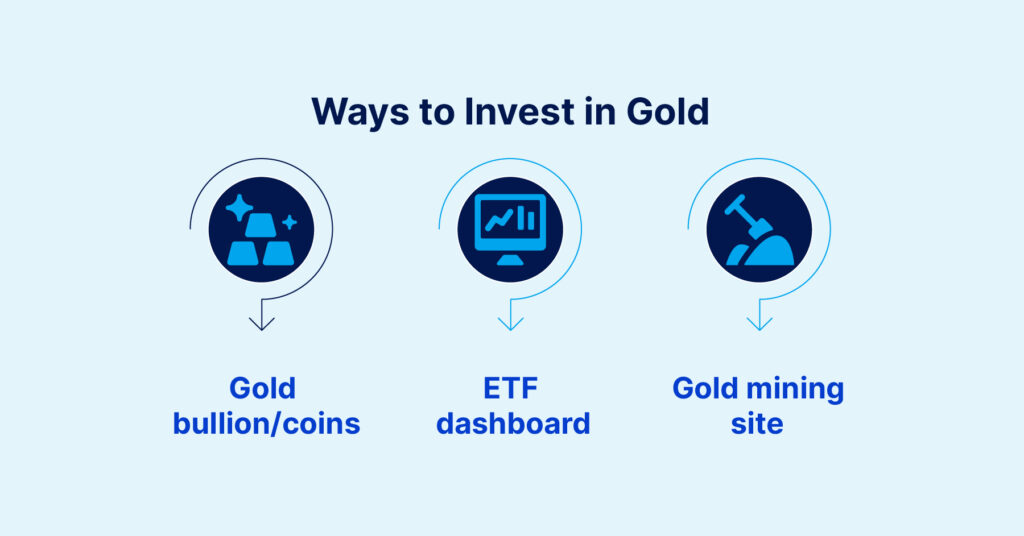
Physical Bullion and Storage
When people ask how to invest in gold in Africa, physical ownership usually comes first. Gold coins, bars, and jewelry give direct ownership that doesn’t depend on financial institutions, something that matters when banking systems face pressure.
Popular choices include South African Krugerrands, American Eagles, Canadian Maple Leafs, and bars from one gram to full ounces. The challenge isn’t buying, it’s storing safely. For smaller amounts, a quality home safe with insurance works, though security concerns limit this approach. Most moderate holdings work best with bank safety deposit boxes, offering better security at $200-600 annually. Substantial positions might require specialized precious metals storage facilities.
Here’s the cost reality: storage typically runs 0.5-2% annually, insurance adds 0.1-0.5%, and you’ll pay 2-8% premiums above spot prices when buying. For a $10,000 position, expect $300-500 in annual costs. That seems expensive until you remember this is insurance, not just investment.
ETFs and Gold-Backed Notes
Gold ETFs solve the storage problem with liquid, low-cost exposure minus security headaches. African investors have several paths with different trade-offs.
In South Africa, JSE-listed options like Satrix Gold ETF (ETFGLD) and NewGold ETF (NGLD) are rand-denominated, eliminating currency conversion costs but introducing tracking differences when the rand moves. These work well for rand-based thinking with easy local broker access.
For direct dollar exposure, international giants like SPDR Gold Trust (GLD) and iShares Gold Trust (IAU) offer superior liquidity and precise dollar gold price tracking. GLD provides the world’s largest gold ETF with excellent liquidity, while IAU offers lower expense ratios.
The catch: international ETFs require foreign brokerage accounts and currency conversion costs both ways. But you get direct dollar exposure and better liquidity during volatile periods. Management fees typically run 0.25-0.75% annually, much cheaper than physical storage for smaller positions.
Mining Equities for Growth Exposure
Mining stocks amplify gold moves because mining profits increase faster than gold prices during bull markets. Companies with African operations include Barrick Gold, AngloGold Ashanti, Gold Fields, and Newmont. Regional specialists like Sibanye-Stillwater and Harmony Gold focus on South African operations.
The appeal is leverage and dividends. When gold rises, mining profits can rise faster, and many companies pay dividends that physical gold can’t. The downside: operational risks, political factors, and management decisions that hurt returns even when gold performs well. It’s a trade-off between pure gold exposure and potential outperformance during bull markets.
Other Commodities for African Investors
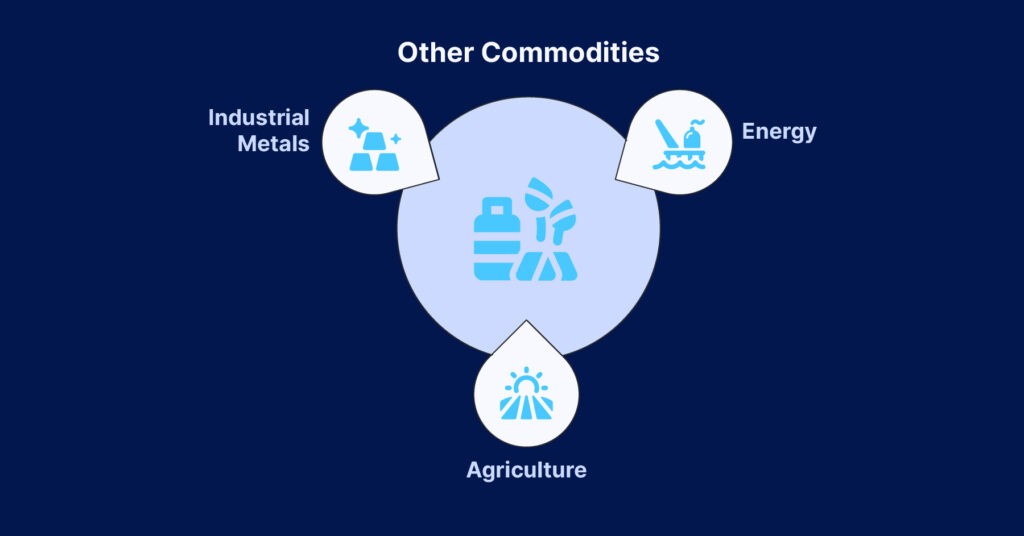
Energy Commodities
Africa produces significant oil and gas, making energy commodities natural portfolio hedges aligned with regional economics. When intra-African trade reached $192.2 billion in 2023, much depended on energy infrastructure that benefits from stable or rising energy prices.
Access options include broad energy ETFs like Energy Select Sector SPDR (XLE) for diversified exposure, or oil-specific funds like United States Oil Fund (USO) for direct crude tracking. Regional plays include companies like Sasol in South Africa and Seplat Energy in Nigeria, though these carry higher individual company risk.
Natural gas exposure through the United States Natural Gas Fund (UNG) rounds out energy allocation. Energy commodities provide inflation hedging and benefit from global growth, but they’re volatile and sensitive to geopolitical surprises.
Agricultural Commodities
Given Africa’s agricultural significance and the reality that food inflation hits African households hardest, agricultural commodity exposure creates natural portfolio protection. Broad approaches include Invesco DB Agriculture Fund (DBA) for diversified exposure, or specific funds like Teucrium Corn Fund (CORN) for individual crop tracking.
Local angles include direct farming investments, agricultural cooperatives, regional food processing companies, and agricultural equipment businesses. These combine commodity exposure with Africa’s development story, where changing diets and population growth create long-term agricultural demand.
Industrial Metals
With Africa’s economic acceleration from 3.3% to 3.9% growth, substantial infrastructure development drives industrial metals demand. Metals exposure captures this theme while diversifying beyond gold and energy.
Options include Invesco DB Base Metals Fund (DBB) for copper, aluminum, and zinc exposure, infrastructure’s building blocks. Pure copper comes through iPath Bloomberg Copper ETN (JJC), while Aberdeen Platinum ETF (PPLT) covers platinum and palladium. Industrial metals benefit from infrastructure spending and manufacturing growth, making them natural complements to Africa’s development trajectory.
Costs, Liquidity, and Tracking Differences
Understanding real costs helps make smarter decisions about which approaches suit your situation and set realistic expectations.
Physical ownership involves several cost layers. Initial premiums run 2-8% above spot price, shop around because dealer markups vary significantly. Ongoing costs include safety deposit boxes ($200-600 annually), insurance (0.1-0.5% of value yearly), and security systems for home storage. When selling, expect dealer spreads of 1-5% plus 1-7 days transaction time.
For positions under $10,000, physical ownership costs often exceed ETF fees substantially, which is why many smaller investors start with ETFs and move toward physical gold as positions grow.
ETF costs are simpler but vary by type. Management fees range from 0.25% for basic gold tracking up to 0.75% for specialized commodity funds. Add standard brokerage commissions plus bid-ask spreads—liquid ETFs like GLD have tight 0.02-0.05% spreads, while specialized funds might see 0.10-0.25%. For African investors buying dollar ETFs, currency conversion can add 0.25-0.75% per transaction.
Commodity ETFs don’t always track underlying prices perfectly due to structural factors. When futures curves slope upward (contango), rolling contracts create return drag. When curves slope downward (backwardation), rolling can enhance returns. Physical-backed gold ETFs track spot prices closely, while futures-based funds experience more tracking differences.
Risks and What Can Go Wrong
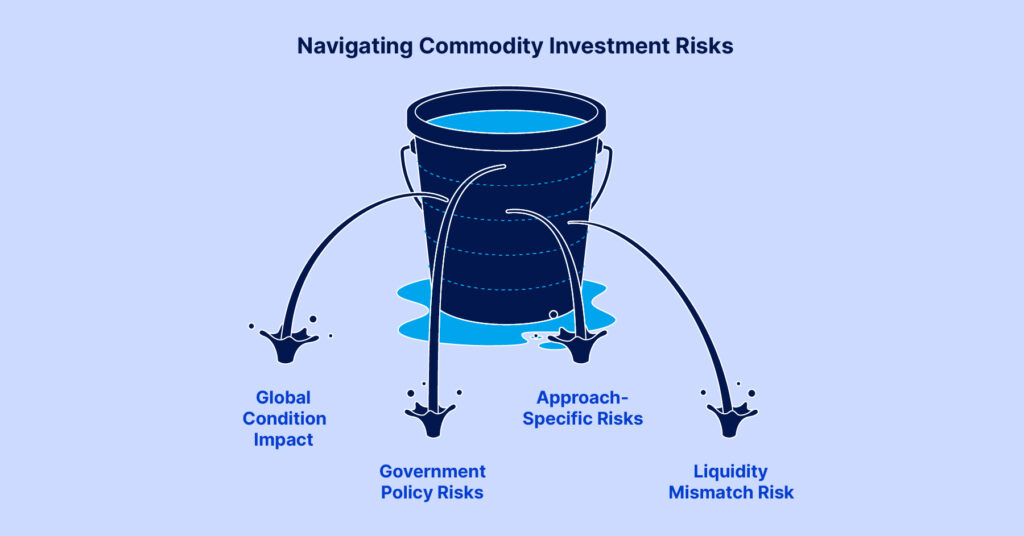
Commodities are more volatile than most expect when starting. Gold can swing 20-30% annually, while energy and agricultural commodities move even more dramatically. With 25% portfolio allocation to commodities, those swings impact overall wealth significantly and it is why disciplined allocation limits matter.
Price movements connect to global conditions, currency fluctuations, and geopolitical events in surprising ways. During deflationary periods, commodity prices can fall hard even when the currency and political risks that motivated your allocation persist. This timing mismatch, your hedge not working exactly when you think you need it, requires mental preparation.
Government policies create another risk layer particularly relevant for African investors. Import restrictions, mining regulations, taxation changes, and currency controls impact commodity markets unpredictably. You’re dealing with local regulations affecting foreign investment access and international policies impacting commodities themselves.
Each approach brings specific risks. Physical commodities face theft, fraud, and storage facility risks that paper instruments avoid. But ETFs create counterparty risks, fund management failures, and tracking errors that hurt performance even when underlying commodities perform well.
The most practical risk is liquidity mismatch. Physical commodities take 1-7 days to convert to cash. During crisis periods when commodity exposure should theoretically provide most value, liquidity constraints can force unfavorable selling situations. Plan for this upfront, maintain cash reserves separate from commodity allocations and understand commodities are medium-term portfolio insurance, not emergency funds.
Example Allocations and Rebalancing Strategies
Conservative Approach: 12-15% Total Allocation
- 8% Gold exposure: 3% physical, 5% ETFs
- 4% Energy/agricultural: Broad commodity ETFs
- 3% Mining stocks: Major African-operating companies
Moderate Approach: 15-20% Total Allocation
- 10% Gold: 4% physical, 4% ETFs, 2% mining stocks
- 6% Energy: Oil ETFs and energy company mix
- 4% Agricultural/metals: Diversified commodity funds
Aggressive Approach: 20-25% Total Allocation
- 12% Gold: 6% physical, 4% ETFs, 2% mining stocks
- 8% Energy: Direct commodity funds and stocks
- 5% Agricultural/metals: Specialized exposure
Rebalancing Guidelines:
- Quarterly reviews to maintain target ranges
- Threshold-based rebalancing when allocations move 25% from target
- Tax-aware rebalancing in taxable accounts
- Resist abandoning allocations during crisis periods when they provide most protection
Practical Access in African Markets
South Africa offers the most developed access through JSE-listed commodity ETFs and extensive mining stocks. Local brokers provide both domestic and international commodity access.
Nigeria has limited local options but growing international broker access. Focus on international platforms for comprehensive exposure, though capital controls limit practical access to $5,000 annually without Central Bank approval.
Kenya provides some agricultural exposure through Nairobi Securities Exchange, primarily agricultural companies and limited mining stocks. International brokers offer broader access for eligible investors.
Egypt offers mining and commodity-related stocks on the Egyptian Exchange, plus international platforms for those meeting regulatory requirements.
International broker access varies significantly. Interactive Brokers accepts clients from most African countries with proper documentation, offering comprehensive commodity access including ETFs and mining stocks. Saxo Bank provides strong commodity platforms with African client support, though minimum deposits often require $10,000-25,000. Local banks with international services offer limited commodity options compared to specialized brokers.
Minimum requirements depend on approach. Physical gold can start with small coins (1 gram ≈ $65) but practical minimums around $2,000 due to storage and premium costs. Gold ETFs allow single share purchases ($20-200 per share). Mining stocks vary widely from under $10 to over $100 per share.
FAQs
Is Physical Gold Better Than ETFs?
The choice depends on your specific situation. Physical gold works better when total allocation exceeds $5,000-10,000 (costs become reasonable), you prioritize crisis insurance over returns, have secure storage available, and accept lower liquidity.
ETFs work better for smaller allocations under $5,000, when you need liquidity and easy rebalancing, storage and security are concerns, and you want to avoid higher premiums and storage costs.
Many investors use hybrid approaches: physical gold for core crisis protection (30-50% of gold allocation) and ETFs for flexibility and trading ease.
What Are Typical Minimums and Fees?
Physical gold minimums range from 1-gram coins (~$65) to 1-ounce coins (~$2,000), with practical minimums of $2,000-5,000 for cost efficiency. Annual costs include storage ($200-500) and insurance, plus 2-5% purchase premiums.
ETFs allow single share purchases with typical prices of $20-200 depending on fund. Management fees run 0.25-0.75% annually with no storage fees.
For $10,000 gold investment comparison: physical gold costs $200-500 annually in storage/insurance plus purchase premiums, while ETFs cost $25-75 annually in management fees plus trading commissions.
Conclusion
Gold and commodities offer African investors protection against currency volatility, inflation, and political uncertainty that traditional portfolios can’t match. The evidence supports higher commodity allocations, 15-20% for most African investors versus 5-10% developed market recommendations, given unique risks we face.
This isn’t speculation or trying to time commodity cycles. It’s building resilient portfolios that maintain purchasing power across different economic conditions. Start simple: begin with gold exposure through ETF/physical combination for your risk tolerance. Add energy and agricultural exposure gradually based on experience.
Focus on low-cost, liquid instruments unless you have specific reasons for alternatives. Success requires patience, discipline, and regular rebalancing to maintain targets. The opportunity exists while commodity prices remain reasonable and access continues improving.
Consider speaking with a financial advisor familiar with African market conditions to discuss your specific allocation needs and implementation strategy.
Past performance does not guarantee future results. Commodity investments involve substantial risks including price volatility, political factors, and liquidity constraints.